Thursday, December 30, 2010

For healthy eating, swallow a rainbow

I came across this great article on healthy eating this morning  For Healthy Eating, Swallow a Rainbow, and wanted to share it with you. As it turns out the author of the article, Patty James, has a book as well.

I liked the way she broke out the various properties the veggies have that our bodies need to be healthy.

Enjoy.

Life is a journey, enjoy the trip!
Mary E. Robbins
Robbins Run Ranch


By Patty James

Why is it important to eat lots of different colored fruits and vegetables? Because each colored vegetable and fruit has unique properties and there is strong evidence of interactions between the colors that are beneficial to your health. Eating by the Rainbow is vitally important to your well-being.
Here are the colors:
Red foods contain lycopene that helps rid the body of damaging free radicals and protects against prostate cancer, as well as heart and lung disease. The red foods are loaded with antioxidants thought to protect against heart disease by preventing blood clots, and may also delay the aging of cells in the body.
  • Tomatoes
  • Beets
  • Radishes
  • Red cabbage
  • Cherries
  • Cranberries
  • Pink grapefruit
  • Red grapes
  • Red peppers
  • Pomegranates
  • Red potatoes
  • Watermelon
  • Raspberries
  • Red apples
  • Rhubarb
  • Strawberries
Orange and Yellow foods contain alpha carotene, which protects against cancer, but also contain beta-carotene, which the body converts to vitamin A, protecting the skin against free-radical damage. Beta-carotene is also good for night vision.
  • Yams and sweet potatoes
  • Carrots
  • Yellow apples
  • Apricots
  • Butternut squash
  • Cantaloupe
  • Carrots
  • Grapefruit
  • Lemons
  • Mangoes
  • Nectarines
  • Oranges and Tangerines
  • Papayas
  • Peaches
  • Pears
  • Yellow peppers
  • Persimmons
  • Pineapple
  • Pumpkin
  • Yellow summer or winter squash
  • Sweet corn
  • Yellow tomatoes
Green foods contain the chemicals that help ward off cancer by inhibiting carcinogens. Chlorophyll is the component that makes plants green, and it is purifying in the body. Many green foods also contain calcium and minerals.
  • Kale, spinach, and other leafy greens
  • Green apples
  • Artichokes
  • Sea vegetables
  • Asparagus
  • Avocados
  • Green beans
  • Broccoli
  • Brussels sprouts
  • Green cabbage
  • Cucumbers
  • Green grapes
  • Kiwi
  • Lettuce
  • Limes
  • Green onions
  • Peas
  • Zucchini
Blue, Indigo, and Violet foods contain the compound anthocyanins that not only give food their color but also have been shown to reduce the risk of high blood pressure and increasing heart health.
  • Blueberries
  • Blackberries
  • Purple grapes
  • Figs
  • Raisins
  • Plums, fresh and dried
  • Eggplant
White foods, though not part of the color of the rainbow, contain properties that have anti-tumor qualities, such as allicin in onions as well as other health-improving antioxidants such as the flavanoids. The white foods, like bananas and potatoes, contain potassium as well.
  • Bananas
  • Onions
  • Cauliflower
  • Garlic
  • Ginger
  • Jicama
  • Mushrooms
  • Potatoes
  • Parsnips
  • Turnips
So how do you incorporate these fruits and vegetables into your daily eating habits?
Here are some sample menus to get you started:
Breakfast:
  • An orange. Sauté 1/2 red pepper, ½ onion, 2 shitake mushrooms, and 2 cloves garlic. Add 3 cups leafy greens (spinach leaves are fine) and 3 eggs. Cook until eggs are done and serve.
  • Strawberries. Oatmeal made with cubed butternut squash or pureed pumpkin, topped with raw walnut pieces and raw pumpkin seeds.
Lunch:
  • Turkey sandwich on whole grain bread with sprouts, lettuce, tomato slices, avocado, and grated carrots. Serve with a 2-cup salad made with romaine lettuce and raw cauliflower, broccoli, and garbanzo beans.
  • Spinach salad topped with black olives, cherry tomatoes, cucumbers, green onions, and cauliflower. Add beans or chicken if you like. Toss with fresh lemon juice and either olive oil or flax oil or a combination of the two. Sprinkle fresh parsley, chopped, on top.
Dinner:
  • Grilled fish or chicken breast or black beans and brown rice (protein). Coleslaw made with green and red cabbage with red onions and grated carrots. Baked yam.
  • Pasta primavera made with spinach fettuccini, sautéed red peppers, onions, garlic, zucchini, carrots, and whatever else is in season.
Snack:
  • 1 cup blueberries and cantaloupe
  • Jicama slices with salsa and celery with hummus or peanut or almond butter
  • Pineapple chunks and banana slices
  • Raw veggies with your favorite dip. Hummus is a good choice.
  • Tangerine slices with herb tea
Remember that you need 5–9 cups of vegetables and fruits a day for good health. Make sure at least half of your veggies are raw. Don't forget that juicing can incorporate many colored fruits and veggies easily and may be a good choice for those who may not be able to chew raw fruits and veggies.
Patty James is a Certified Natural Chef with a Master's degree in Holistic Nutrition and was founder and director of the Patty James Cooking School and Nutrition Center, the first certified organic cooking school and nutrition center in the country. She created the Patty James Health Guide, a guide to life-long healthy eating and lifestyle. Patty is a frequent guest speaker in public and private schools around the US, the Clinton Foundation in New York, as well as to health practitioners and organizations. Patty runs Shine the Light on America's Kids, an organization whose mission is to shine the light on all aspects of kids' health in America. She is the author of More Vegetables, Please! Website: PattyJames.com and ShineTheLightOnKids.org

Tuesday, December 28, 2010

Weight Loss Sabotage - Prevention.com

Here is the question of the day.  Have any of us not run into this in some form.  Deliberate or not... hmmmmm...

Weight Loss Sabotage

Dieting with the Enemy
Are friends and family making you fat?
Want to really bring out the worst in people? Try weight loss. Ten pounds or a ton, you'll be showered with so much fattening food--sabotage by people who claim to love you--that it will send the price of sugar cane and lard futures through the roof.
Why is that?
I've seen it happen so many times to my weight loss patients that when they come in and confess they fell off the wagon, I'm ready with my ritual response: "Who did this to you?"

They're always shocked to think that someone else may have had a hand in their weight loss failure. Then it dawns on them: Oh yeah, the chocolate cake care package Mom just sent, the surprise candy from the usually unthoughtful husband, the coworker who left the gift-wrapped Oreos on your desk. "Why is that?" they always ask. Dietsaboteurs," I explain. "They're everywhere." In fact, in one survey, 24,000 overweight women reported that weight loss created problems in their relationships that regaining the weight would have resolved.

Friend or Foe?
The problem usually starts because you're in change mode (and darned happy to be there), but your friends and family aren't.


"Rarely would a real friend malevolently undermine your diet," says nutrition professor Audrey Cross, PhD, of Rutgers University in New Brunswick, NJ. "They just do unconscious things to keep the relationship the way it was." And there are lots of reasons why.


They feel guilty. Your success pricks their conscience, since they may think they should be pursuing weight loss too. But for many, teasing you back to normal with "you're doing so well; a little won't hurt" sabotage is often easier. And if it starts an eating frenzy that ends in weight gain, sadly, that's secretly okay with friends like these. You've proven once again that weight loss is impossible; now they can relax and not try.

They don't understand. Other folks (often spouses!) who've never had a weight problem can't understand why you don't go back to eating normally now that you've lost that weight. And besides, they've suffered enough with all the changes around the house, and they want this to be over.


They miss the old you. Or more specifically, the food experiences you once shared. Food is often how we express love. Baking cookies for your kids (and of course eating some together). Or going to happy hour with coworkers. When my client Stephanie began progressing, her husband started showing up Friday nights with a big chocolate bar, something they used to enjoy together.


How do you politely say "back off" to those you love?

Make Friends with the Enemy
Researchers have figured out three classic actions likely to pave the way to long-term weight loss success and fend off sabotage, whether deliberate or subconscious, says Jessica Kasinoff, coordinator at the Duke Diet & Fitness Center in Durham, NC.


Start with exercise. It builds muscle, burns calories, reduces stress, and, best of all, creates the positive mood that makes you strong enough to avoid saboteurs.


Monitor your exercise and food. Plan your workouts and meals, and write down every bite. This will keep you honest, and it may also help you recognize the people and events that do you in. Then you can develop strategies to deal with them.


Create a supportive environment. "It's important to ask for help," says Carlo DiClemente, PhD, coauthor of Changing for Good, whose strategies for curing drug and alcohol addicts are now being used to help people change the way they eat.
Asking is tricky because we really don't know how to do it. We tend to believe that if people loved us, they'd know what to do. Not true! My client Sharon likes it if her husband takes her plate away from her when he thinks she's had enough. Natalie, on the other hand, would secretly eat twice as much if her husband did that.


The staff at the Duke Center finds this so critical that they have created a "Dear Supporter" letter that goes home with dieters after their 3-week stay. You could write such a letter yourself if you have trouble voicing your needs directly.

 
Whether you write it or say it, be specific about your weight loss needs
. Even those closest to you can't read your mind. For instance, if being constantly asked how much you've lost will drive you to cheat, let people know. For others, constant checking in may help keep them on track. If you need support when the late-night munchies hit, ask your friend if it's okay to call.

With Friends Like These ...
There are some downright vicious diet saboteurs who work to undermine you. They may pressure you to eat the way they do in order to remain part of a group, not-so-subtly implying that you're no friend if you don't. Dr. DiClemente suggests saying clearly out loud, "This is not helpful to me." They can't deny they've heard you, and you have a chance to recommit to your plan of action. You may have to avoid them for a while or find less toxic friends. If all else fails, "call a sponsor," he says, lapsing into the classic Alcoholics Anonymous strategy. Join a group such as Weight Watchers for support, or call someone you know who will talk you through it.


If you've been direct in asking your spouse for help but don't get it, you may need to seek couples' or family counseling. Poor response often suggests something else is going on.


Most family and friends will be glad to help if you nudge them in the right direction.


Last Updated: 10/04/2004 Copyright (c) Rodale, Inc. 2003
Weight Loss Sabotage - Prevention.com

Article has some valid points... hope it was useful to you.
Mary E. Robbins
Robbins Run Ranch

Thursday, December 09, 2010

Christmas Trees From Around the World... Story of a Christmas Carol

The following photos and descriptions came to me in an email.  So did the story of the Christmas Carol.  I enjoyed looking at the wonderful Christmas trees and decided to pass them along.

I found the story of the Christmas carol to be intriguing.  I have no idea as to the accuracy of either the photos or the story... none the less twas enjoyable...

May it bring joy to you as well...

Life is a journey, enjoy the trip.
Mary E. Robbins

**********

Christmas Trees From Around The World


The Capitol Christmas tree in Washington , D.C. , is decorated with 3,000 ornaments that are the handiwork of U.S. schoolchildren. Encircling evergreens in the 'Pathway of Peace' represent the 50 U.S. states.


The world's largest Christmas tree display rises up the slopes of Monte Ingino outside of Gubbio, in Italy 's Umbria region. Composed of about 500 lights connected by 40,000 feet of wire, the 'tree' is a modern marvel for an ancient city.


A Christmas tree befitting Tokyo 's nighttime neon display is projected onto the exterior of the Grand Prince Hotel Akasaka.


Illuminating the Gothic facades of Prague's Old Town Square, and casting its glow over the manger display of the famous Christmas market, is a grand tree cut in the Sumava mountains in the southern Czech Republic.


Venice 's Murano Island renowned throughout the world for its quality glasswork is home to the tallest glass tree in the world. Sculpted by master glass blower Simone Cenedese, the artistic Christmas tree is a modern reflection of the holiday season.


Moscow celebrates Christmas according to the Russian Orthodox calendar on January 7.

For weeks beforehand, the city is alive with festivities in anticipation of Father Frost's arrival on his magical troika with the Snow Maiden.

He and his helper deliver gifts under the New Year tree, or yolka, which is traditionally a fir.


The largest Christmas tree in Europe (more than 230 feet tall) can be found in the Praa do Comrcio in Lisbon , Portugal .  Thousands of lights adorn the tree, adding to the special enchantment of the city during the holiday season.


'Oh Christmas tree, Oh Christmas tree': Even in its humblest attire, aglow beside a tiny chapel in Germany 's Karwendel mountains, a Christmas tree is a wondrous sight.


Ooh la la Galeries Lafayette! In Paris , even the Christmas trees are chic. With its monumental, baroque dome, plus 10 stories of lights and high fashion, it's no surprise this show-stopping department store draws more visitors than the Louvre and the Eiffel Tower .


In addition to the Vatican 's heavenly evergreen, St. Peter's Square in Rome hosts a larger-than-life nativity scene in front of the obelisk.


The Christmas tree that greets revelers at the Puerta del Sol is dressed for a party. Madrid 's two-week celebration makes millionaires along with merrymakers. On December 22, a lucky citizen will win El Gordo (the fat one), the world's biggest lottery.


A token of gratitude for Britain 's aid during World War II, the Christmas tree in London 's Trafalgar Square has been the annual gift of the people of Norway since 1947.


Drink a glass of gluhwein from the holiday market at the Romer, Frankfurt 's city hall since 1405 and enjoy a taste of Christmas past.


Against a backdrop of tall, shadowy firs, a rainbow trio of Christmas trees lights up the night (location unknown).

*********

There is one Christmas Carol that has always baffled me.

The real meaning of "The Twelve Days of Christmas" - which I didn't know...


What in the world do leaping lords, French hens, swimming swans, and especially the partridge who won't come out of the pear tree have to do with Christmas?

This week, I found out.

From 1558 until 1829, Roman Catholics in England were not permitted to practice their faith openly. Someone during that era wrote this carol as a catechism song for young Catholics. It has two levels of meaning: the surface meaning plus a hidden meaning known only to members of their church. Each element in the carol has a code word for a religious reality which the children could remember.

The partridge in a pear tree was Jesus Christ.

Two turtle doves were the Old and New Testaments.

Three French hens stood for faith, hope and love.

The four calling birds were the four gospels of Matthew, Mark, Luke & John.

The five golden rings recalled the Torah or Law, the first five books of the Old Testament.

The six geese a-laying stood for the six days of creation.

Seven swans a-swimming represented the sevenfold gifts of the Holy Spirit--Prophesy, Serving, Teaching,Exhortation, Contribution, Leadership, and Mercy.

The eight maids a-milking were the eight beatitudes.

Nine ladies dancing were the nine fruits of the Holy Spirit--Love, Joy, Peace, Patience, Kindness, Goodness,Faithfulness, Gentleness, and Self Control.

The ten lords a-leaping were the ten commandments.

The eleven pipers piping stood for the eleven faithful disciples.

The twelve drummers drumming symbolized the twelve points of belief in the Apostles' Creed.

So there is your history for today. This knowledge was shared with me and I found it interesting and enlightening and now I know how that strange song became a Christmas Carol...so pass it on if you wish.

Merry Christmas Everyone

Thursday, September 02, 2010

What Would It Take for You to Be Still?

Being still has always been a challenge for me... It seems like my mind is always on warp speed. Buzzing along even as I try to go to sleep.  I  have noticed that often I will wake up with a solution... or at least a series of ideas ... about whatever it was I was mulling over the night before.  Unfortunately I can also wake up exhausted from my mind's night work...lol...

So, actually being able to be still... enjoy a moment of absolute stillness sounds delightful to me...

Enjoy...

Life is a journey, sometimes the trip is rather noisy...
Mary E. Robbins
Robbins Run Ranch: 
307.788.0202

What Would it Take for You to be Still?
 By Catherine Price
O, The Oprah Magazine  |  August 04, 2010
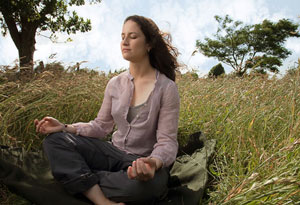
Catherine Price meditating
Photo: Julian Dufort
How can you learn to slow down time, quiet the mental chatter, and savor life's breezes? With mindfulness, one snowcapped mountain meditation at a time.


When I decided to take up meditation, it seemed so easy—slip on a pair of yoga pants, force your legs into half lotus, and "om" your way to serenity and bliss. Forget that my hips are too tight for even a quarter of a lotus, or that the last time I felt truly serene, prescription drugs were involved. I had to try it—I needed to find a way to slow things down.

Lately it's felt like my life is on warp speed. Weekends blur into months; months blur into seasons. I eat fast, I talk fast, I walk fast—I swear I even sleep fast. And I find it almost impossible to sit still. All that research showing that fidgeting burns tons of calories is good news for me. I may get a lot done, but smell the roses? I'm not even getting a passing whiff.

We've all had the experience of sensing time decelerate naturally when we're not so thrilled about what we're doing (think torturous spinning class or hour-long "synergy workshop" at the office). As my dear grandmother would have said, it takes only one colonoscopy to prove that time is relative. But what about the more enjoyable times in life? I hoped that practicing the popular and proven type of meditation called mindfulness—which focuses on bringing awareness to the present moment—might help me slow those times down as well.

Ready to begin, I went straight to the source: Jon Kabat-Zinn, PhD, the founder of the Stress Reduction Clinic at the University of Massachusetts Medical School. Kabat-Zinn is the creator of an eight-week course called Mindfulness-Based Stress Reduction (MBSR), which he began teaching in 1979 and which is now the largest and oldest meditation-based clinical program in the world. (Kabat-Zinn's program is taught at the University of Massachusetts, but you can find other MBSR courses around the country.)

There are many types of meditation, so why did I opt for MBSR? Two reasons. First, I liked that it's taught in a secular context; even though it's based on some core principles of Buddhism, I didn't need any background knowledge to begin. Second, as someone who wants to understand why I'm doing something—especially when that thing is challenging—I liked the idea that there was scientific proof of its effectiveness. (Because its curriculum is so consistent, it's one of the most studied forms of meditation in the world.)

Kabat-Zinn suggested I start at home by practicing one or two guided 20- to 45-minute exercises six days a week (yes, even meditators need a day off). After we talked about my reason for wanting to meditate—Kabat-Zinn says it's important to identify your motivation before you begin, or you'll be tempted to give up—he recommended that I kick off my practice with what he thought would be an easy starting point: a visualization called the mountain meditation. I loaded my iPod with the 20-minute exercise, which requires you to sit erect on the floor or a chair, close your eyes, and observe your breathing as you imagine a mountain. First, you notice small details—the trees that cover its slopes, perhaps a dollop of snow at the peak—and eventually you try to imagine becoming the mountain itself, feeling its strength and solidity and noticing that even when it's battered by the wind or drenched with rain, its rock-hard interior remains stable and calm. (Meditation teachers love metaphors.)

The goal of the mountain meditation is the same as with every other mindfulness technique—whether you're focusing on an image, your breath, or sensations in your body, you're trying to coax your mind into what Kabat-Zinn calls a state of nondoing. That's not the same as doing nothing. Rather, it means you're not thinking about your grocery list or the conversation you had with a friend last night or the unfinished report sitting on your desk at work. Nor are you trying to force your mind to go blank or conjure up any special feelings. You're concentrating on just one thing, experiencing each moment as it happens, and trying to be—if I might quote Van Halen—right here, right now. 
 
What does experiencing the moment have to do with imagining yourself as a mountain? Think of it as strength training. By learning to quiet your mind's chatter and concentrate solely on your mental Rockies, you're gaining the focus necessary to stay present when you're not actively meditating. The point is to avoid cruising through life on autopilot, so wrapped up in your daily routine that you don't notice the world around you. "Mindfulness is about living your life as if it really mattered," says Kabat-Zinn. "If you're not mentally present in the small moments, you could be missing half your life."

If this nondoing sounds easy, take 20 minutes and try the mountain exercise yourself. It won't be long before your mountain—which in my case was less Mount Everest and more like the label on an Evian bottle—drifts away and is replaced by a game of free association: A mountain reminds you of skiing, which reminds you of a family vacation, which reminds you of the weekend, which reminds you that a friend invited you to dinner on Saturday, which reminds you that you never got back to her and that maybe you should be writing her an e-mail instead of sitting on the floor pretending you're a mountain—which reminds you that you're supposed to be sitting on the floor pretending you're a mountain, which makes you mad at yourself for letting your mind wander. And then—bam. Not only are you no longer cultivating intimacy with the present moment, you're committing one of mindfulness's biggest faux pas: beating yourself up for getting distracted. (As soon as you start making judgments, you're out of the moment.) Kabat-Zinn didn't say this explicitly, but I'm pretty sure that mindfulness exercises should not include obscenities.

After a few days pretending to be a mountain (and, in a different exercise, a lake), it became clear that I am not a visual person. Unable to picture a mountain in the first place, let alone concentrate on it for 20 minutes, I compensated by imagining my breath flowing up my body and rushing out the top of my head—which worked better, until I realized I'd turned my calm snowy peak into a volcano. So with Kabat-Zinn's blessing, I moved on to a meditation that I hoped might come more naturally to me: the body scan. One of the key exercises in the MBSR course, it's 45 minutes of carefully guiding your attention up and down your body, trying to home in on the sensations in each isolated part. The exercise begins with your left big toe and, unfortunately in my case, it often ends there—as Kabat-Zinn likes to point out, while it's very difficult to learn to "fall awake" (become connected to the present moment), it's quite easy, when meditating, to fall asleep.

Still, I stuck with it. I liked the challenge of trying to harness my mind, and I was intrigued by studies showing that MBSR does even more than that. In 2003, for example, scientists from the University of Wisconsin-Madison examined a group that included alumni of Kabat-Zinn's eight-week course, and found that when they received flu shots, the meditators' immune systems produced more antibodies in response to the vaccine than did the nonmeditators'. In a 1998 University of Massachusetts study, patients with psoriasis who meditated while receiving ultraviolet treatments for their skin healed four times faster than the control group—regardless of whether they had any previous meditation training. Researchers don't yet understand all the details of why changes like these occur, but one possible explanation is that this type of meditation reduces stress and helps people develop a more positive outlook, both of which have been shown to strengthen the body's immune system.

What's more, according to researcher Norman Farb, who studies meditation and experimental psychology at the University of Toronto, such mindfulness-based meditation can actually change the way you use your brain. As Farb explains it, most of the time, we (by which I mean your average nonmeditating American) respond to new stimuli and experiences automatically, based on how we think they'll affect us. A traffic jam isn't just cars; it's a problem that will make us late for dinner—so when we see a red wall of taillights in front of us, we become stressed-out. A pair of sneakers strewn in the doorway aren't just discarded shoes; they're an annoying obstacle. So when we trip over them, we (by which I mean your average nonmeditating Catherine) get irritated with our husbands. In other words, we don't just experience, we evaluate—and then respond without thinking (clogged highway = extra minutes stuck in the car = misery).

Typically this type of narrative processing takes place in the medial prefrontal cortex, an area of the brain behind the center of your forehead that coordinates complex behaviors and thoughts. (It's also the part of the brain that's being used when your mind starts to wander.) While it's possible to stifle this default way of thinking, trying to do so is like forcing yourself to go to the gym after years of inactivity—sure, you could fight your way through a step aerobics class if you had to, but wouldn't it be nicer to just eat Doritos on the couch?

Farb has found that people who have completed the eight-week MBSR training, on the other hand, are able to activate an entirely different part of the brain—the insula. Located deep inside your gray matter, the insula informs you of what's happening in the present moment without connecting the experience to a specific emotion. When you're thinking this way, a traffic jam doesn't seem like a problem; it's simply a bunch of cars on the road.

The point of meditation is not to stop you from having an emotional response to what's happening in your life—it's to avoid responding purely out of habit. Every situation, if you think about it, is an invitation for you to react in a certain way, but being mindful gives you the chance to decide how to RSVP. Does the sight of bumper-to-bumper traffic mean you have to get stressed-out? Or could you think of those extra 20 minutes as a chance to listen to a favorite CD? (Judging from the increase in my heart rate just from typing "bumper-to-bumper," I've got work to do.) Is it really worth getting angry at my husband over those misplaced sneakers? Or would I rather be thankful for the fact that he folded the laundry? On the flip side, if it turns out you do want to say yes to the invitation—by feeling happy about a new promotion, for example—you can use mindfulness to savor the moment more fully. It doesn't matter whether the experience is good or bad; mindfulness reminds you that when it comes to your reactions, you're the one in charge.

Still, Kabat-Zinn had warned me not to expect that anything magical would happen while I was meditating, or even that it would always feel enjoyable—a caveat that I appreciated whenever I grew irritable or uncomfortable, or found myself counting down the seconds during my daily practice. He also pointed out that meditation is not a quick fix; becoming—and staying—mindful is a lifelong process.

But as I continued experimenting each day with the guided exercises, I was happy to find that they did become easier. I developed some tricks for everyday life, too—like taking a few slow, conscious breaths to bring my attention back to the present moment, or choosing a particular sense to focus on. And I tried not to get annoyed when my mind wandered. As Kabat-Zinn says, stopping your brain from thinking would be like stopping the ocean's waves. It's more productive to simply observe the thoughts without getting carried away by them—and try to tap into the calm that exists beneath the surface.

By training myself to stay focused during the exercises, I've also gotten better at staying present when I'm not actively meditating. As a result, I've discovered that each day is dense with experiences—the breeze against my skin, the play of light on the grass, the sound of my husband's laugh—and if I want to stretch out time, all I need to do is notice them. When I find my mind racing ahead or am tempted to skip my daily practice, I remember another of Kabat-Zinn's sayings that affirms why this is an experiment I want to continue: Both figuratively and literally, we only have moments to live.

For a guide on how to cultivate mindfulness and suggestions for daily practice, download these meditation exercises. To buy Jon Kabat-Zinn's series of practice CDs, go to JonKabat-Zinn.com. To find a Mindfulness-Based Stress Reduction program near you, go to umassmed.edu/cfm/mbsr.

Keep Reading: How mindfulness meditation works for depression, weight loss and marital problems

Catherine Price is a freelance journalist and author of 101 Places Not to See Before You Die (Harper Paperbacks).

How can you learn to slow down time, quiet the mental chatter, and savor life's breezes? With mindfulness, one snowcapped mountain meditation at a time.

MORE TOP STORIES

'Daily Affirmation' Video